
Motorcycle Key Programming Australia
Motorcycle key programming is the electronic step that teaches a bike’s immobiliser to accept a transponder key or remote fob. Ostan Locksmiths brings compatible coding equipment to confirmed service locations across Australia. The make, model, year and key system determine what can be programmed on site.
- Transponder chips and remote fobs coded to your bike's immobiliser
- Coding done beside the bike, no tow and no workshop visit
- Honda, Yamaha, Kawasaki, Suzuki, BMW, Ducati, KTM and Vespa systems
Get a Free Quote
Bike immobile right now? Call 0410 380 354
We confirm a price on the phone before we travel.
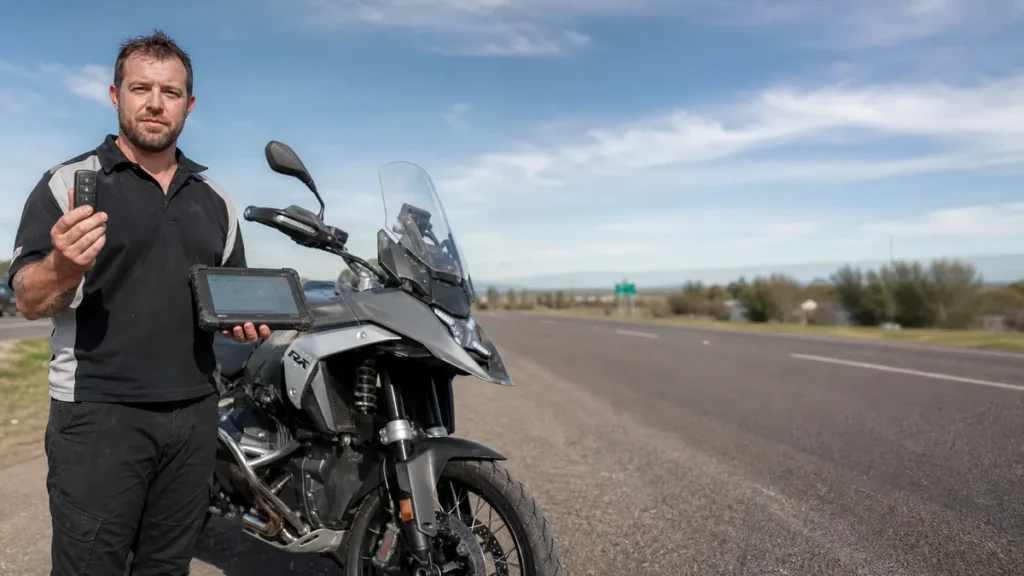
Michael works only on motorcycle, scooter, moped and trail-bike locks and keys, rather than cars, homes or commercial premises.
Motorcycle key cutting and programming equipment comes to the bike at the confirmed Australian service location.
Key cutting, transponder programming, replacement keys and ignition lock repairs are handled at the bike.
Before cutting or programming any key, Michael checks identification and proof of ownership.
Why won't my spare key start the bike?
A newly cut spare will not start a motorcycle until its transponder chip is programmed. The blade turns the ignition barrel and releases the steering lock, but the immobiliser does not recognise the chip, so the engine will not fire. Ostan Locksmiths codes that chip to the bike’s immobiliser across Australia.
- Cutting shapes the blade; programming teaches the immobiliser to accept the chip
- A key can turn the barrel perfectly and still leave the bike completely dead
- Some bikes code a key at the ignition, others through the diagnostic port
- What your bike allows depends on make, model and year, confirmed on the phone
When Programming Is the Answer
Each of these four situations points at the electronic side of the key rather than the blade. If one of them describes what your bike is doing, you are on the right page.
The Spare Turns But Won't Start
You had a spare cut somewhere, it slides into the barrel, the steering lock releases and the ignition turns to on. Then nothing. The dash lights up and the engine will not fire, or it will not even crank. That is a key with the right blade and no electronic identity. The blade half of the job was done; the coding half was not.
Immobiliser Light Flashing on the Dash
Many bikes with a factory immobiliser show a small lamp or key symbol that blinks when the system has not recognised the key. Honda calls its system H.I.S.S. and gives it a dedicated indicator. If that lamp keeps flashing after you switch on, the bike is telling you it does not accept what is in the barrel. Tell us what the lamp does when you call.
A New Barrel the Immobiliser Never Learned
The ignition barrel or lock assembly has been changed, so a different blade now turns the bike, but the immobiliser was never introduced to the chip that came with it. The mechanical half is sorted and the electronic half is not, so the bike either sits dead or cranks and refuses to fire. Tell us when the barrel was changed and what went in.
A Keyless Fob That Isn't Recognised
Kawasaki KIPASS, BMW Keyless Ride and Ducati Hands-Free all work off a fob you keep in your jacket rather than a key you turn. When the bike stops seeing the fob, it can be a flat coin cell, a damaged fob, or a replacement that was never paired to the bike. Say which system you have and whether a second fob exists.
How a Key Gets Coded to Your Bike
Four steps, and the first one happens on the phone before anyone travels.
1. Call With the Bike's Papers
Call 0410 380 354 and read the make, model and year off the registration papers. Tell Michael how many keys exist, whether any of them start the bike, and what the dash does when you switch the ignition on. He confirms the price before anyone travels.
2. We Come to Where the Bike Is
Michael comes to wherever the bike is standing, at home, at work, in a car park or at the kerb, with the programming gear for the system you described on the phone. Nothing is towed and nothing goes to a workshop, because there is no workshop.
3. ID Check, Then Read the System
Photo ID and proof the bike is yours are checked before any key is cut or coded, on every single job. The immobiliser is then read at the bike to confirm which system is fitted, what the coding routine needs, and how many keys it holds where it reports that.
4. Code the Key and Test the Start
The new chip or fob is written into the immobiliser's memory, then tested properly: engine started, ignition switched off and started again, and every other key you own tried, so you know which keys work and which no longer do before Michael packs up.
How a Bike Decides to Accept a Key
Inside the head of a transponder key is a small chip with no battery of its own. Switch the ignition on and the antenna coil around the ignition barrel powers that chip, which answers back with a code. The immobiliser control unit compares the answer against the keys stored in its memory. Match, and the start circuit is released. No match, and the bike either refuses to crank or turns over and never fires, depending on the system.
What differs between bikes is how you get into that memory. Some models accept a new key through a sequence carried out at the ignition with an existing working key present. Others need the immobiliser reached through the diagnostic port, or a stored security code read out of the unit first. Same badge, different year, different method. That is why we ask for the make, model and year before anyone travels.
Keys Live in a Limited List
An immobiliser holds a set number of keys in memory, not an endless supply. On some systems the coding routine rewrites the whole list, so keys left at home or at work quietly stop working.
Battery Voltage Matters
Coding is a write operation, and a tired or flat battery can drop the session part way through. If the bike has been standing for months or needs a jump to crank, say so on the phone.
Fobs Have Batteries, Chips Do Not
A proximity fob runs on a coin cell, and a flat cell looks identical to a pairing fault from the saddle. We check the simple explanation before assuming the fob needs coding to the bike at all.
Aftermarket Alarms Get in the Way
An alarm or immobiliser wired in by a previous owner can block the start even once the factory key is coded correctly. We are locksmiths, not auto electricians, so we do not touch that wiring.
Worth knowing: Programming is the electronic half. If the blade also needs shaping, see our motorcycle key cutting page. The two are often done in one visit, but they are genuinely separate steps.
Not sure which applies to your bike?
Tell us the make, model and year and we will say straight away what is involved. Call 0410 380 354.
What This Service Covers
We code keys and fobs to motorcycles, scooters, mopeds and trail bikes only, never cars, homes or commercial premises.
What this service covers
- Coding new and spare transponder keys to your bike's factory immobiliser
- Pairing replacement remote and proximity fobs where the system allows it
- Adding a spare alongside a key that already works, on systems that permit it
- Re-coding after an ignition barrel or lock assembly has been replaced
- Checking whether a key that turns but will not start is a chip fault or something else
What we do not do
- Engine, wiring, ignition coil, starter and charging faults: locksmiths, not mechanics
- ECU replacement, reflashing or engine management diagnostics of any kind
- Aftermarket alarms or immobilisers wired in by a previous owner or installer
- Any bike whose immobiliser we cannot access, which we tell you on the phone, not at the kerb
Have This Ready Before We Arrive
Coding goes smoothly when the paperwork and the keys are already in one place. Five minutes of preparation saves a lot of standing around beside the bike.
- Photo ID plus proof the bike is yours: registration in your name, a receipt or transfer papers
- Make, model and year off the registration papers, plus the VIN if you can read it off the frame
- Every key and fob you own, working or not, including any kept at home, at work or with a partner
- What the bike actually does: no crank, cranks but will not fire, or an immobiliser lamp flashing
- A charged battery, or tell us it is flat so the job is planned around that before we set up
- Room to stand beside the bike, at the kerb, in a driveway, a car park bay or a basement space
Have this ready: Bring the keys you keep elsewhere if you possibly can. On some systems every key you want to keep working has to be present when the new one is coded, or the absent ones drop out.
Immobiliser Systems by Brand
The badge on the tank tells you which family of immobiliser you are dealing with, and the model year tells you which version of it. A system appearing here does not mean every model or year can be coded, which is why we check your details on the phone first.
Other Motorcycle Locksmith Services
Not quite the problem you have? These are the other jobs we handle for riders across Australia.
Lost Motorcycle Keys
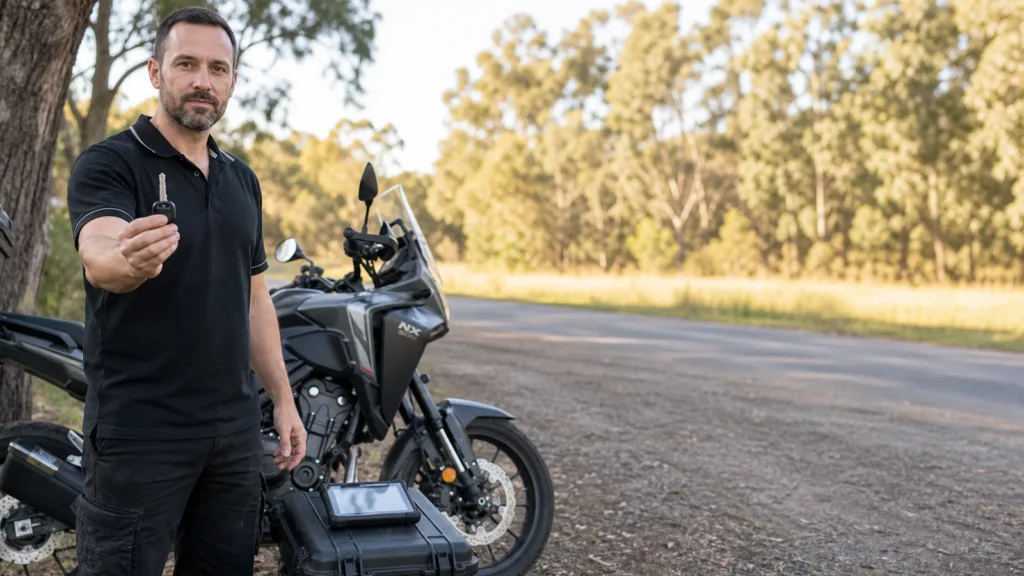
Every key gone. A new key originated from the lock itself, on site.
Motorcycle Key Replacement
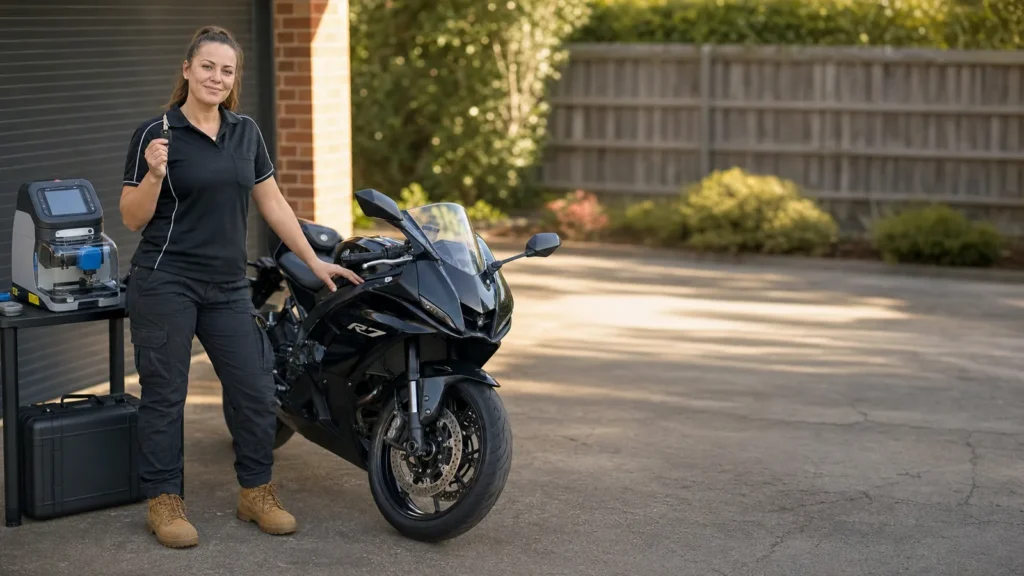
Snapped, bent, worn or water damaged keys replaced and programmed.
Key Cutting & Spare Keys
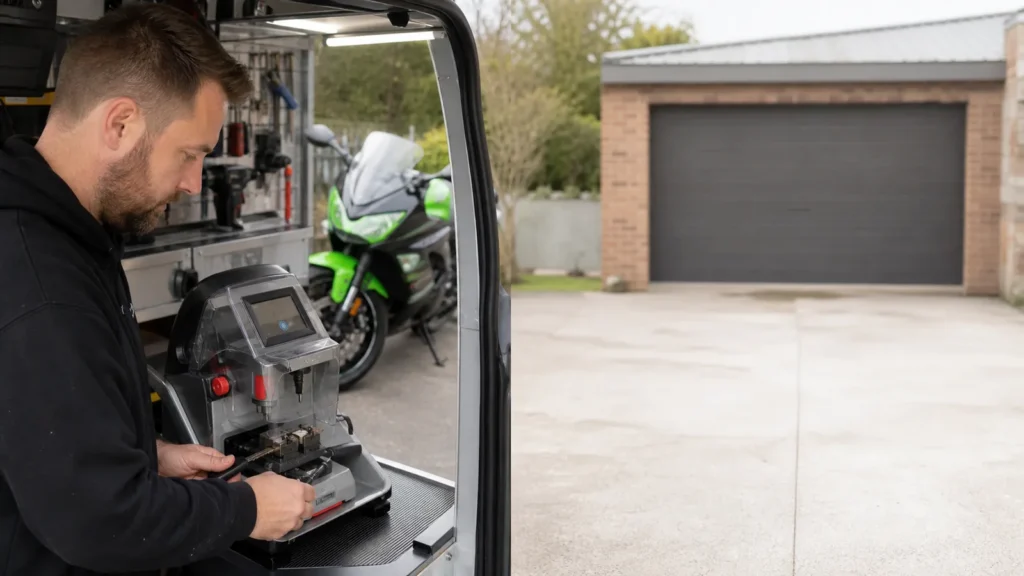
A spare cut while your original still works, before you need it.
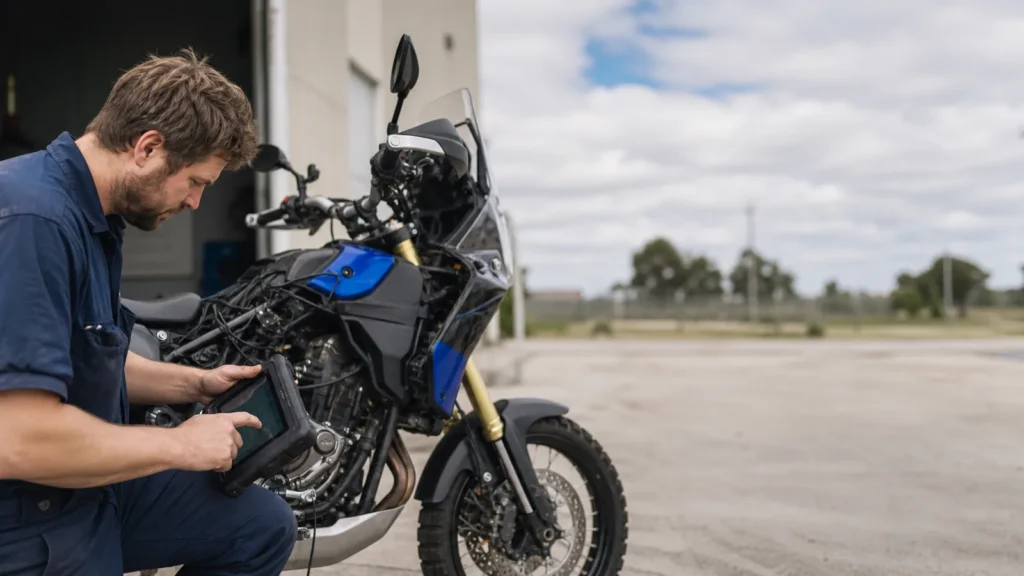
Ignition & Lock Repair
Seized, worn or theft damaged barrels and locks repaired or replaced.
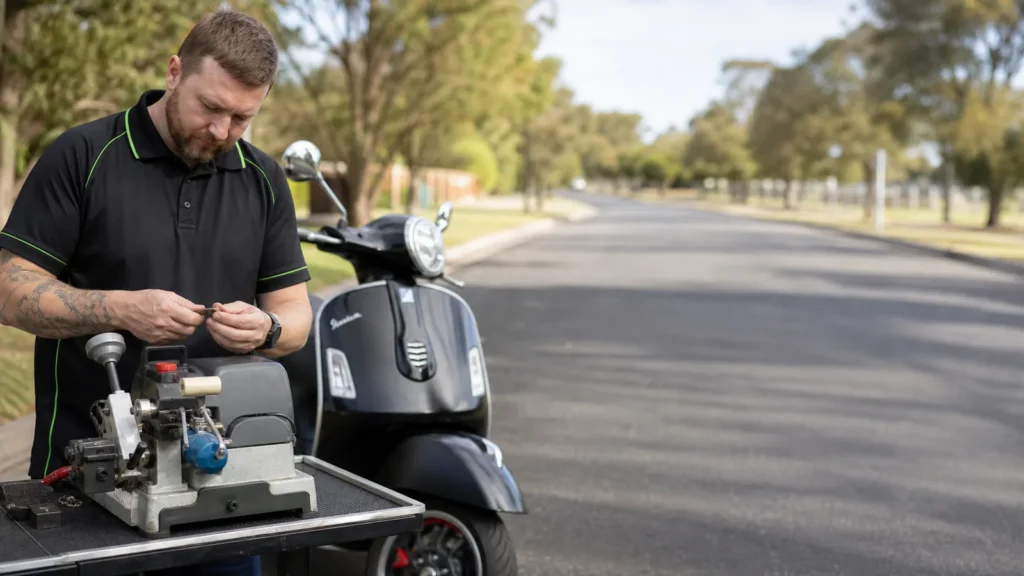
Scooter & Moped Locksmith
The same key and lock service for scooters, mopeds and Vespas.
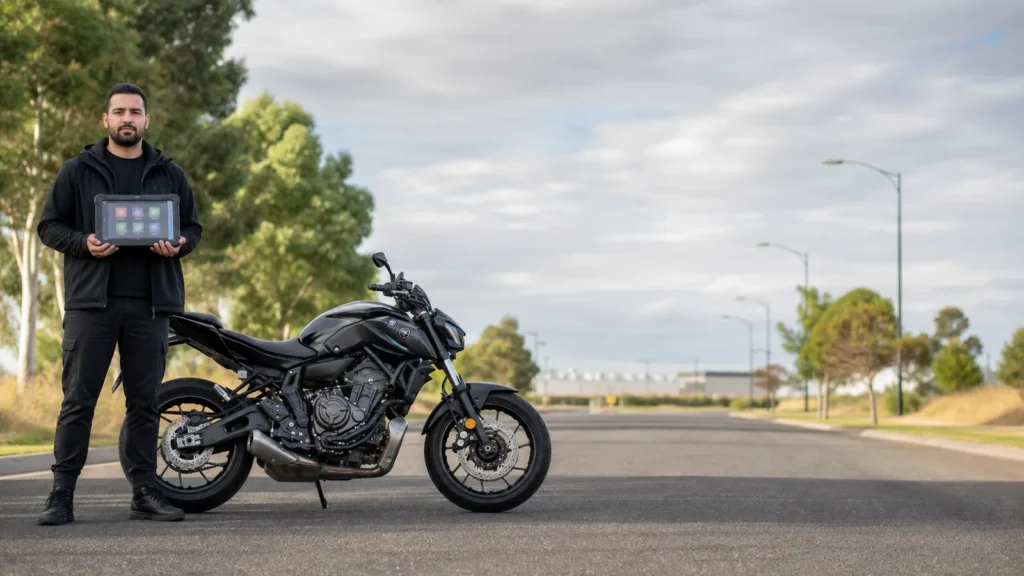
Mobile Motorcycle Locksmith
We travel to your bike across Australia, seven days.
We cover Albert Park, St Kilda, South Melbourne, Port Melbourne, North Melbourne, Brighton and Australia-wide service areas. See all service areas.
Motorcycle Key Programming FAQs
Can you code a key when there is no working key to read from?
Sometimes, yes, but it depends entirely on the immobiliser system in your bike. Some models will only accept a new key when an existing working key is present, others can be coded with no key at all, and a few need a stored security code recovered first. Tell us the make, model and year on the phone and we will say what is realistic before anyone travels.
Will programming a new key stop my existing key from working?
On some bikes it can, which is why we ask you to gather every key first. Certain immobilisers rewrite their whole key list during coding, so any key not physically present at the time drops out of memory and stops starting the bike. Other systems simply add the new key. We tell you which behaviour applies to your bike before we start.
I bought a key online. Can you just code it to my bike?
Sometimes, and sometimes not. The blank has to be the correct type for your bike and the chip inside it has to be one your immobiliser can talk to, and online listings are not always honest about either. Have it with you when Michael arrives and he will check it, but we may need to supply a key we know will take the code.
Can you pair a replacement keyless fob to my bike?
On a good many models, yes. Kawasaki KIPASS, BMW Keyless Ride and Ducati Hands-Free are proximity systems, so the fob is paired electronically rather than cut, and each carries a separate mechanical emergency blade for the lock itself. Whether a replacement fob can be paired beside the bike depends on the model and year, and some are held to dealer equipment. Tell us which system you have and whether a second fob still works.
The immobiliser light on my dash keeps flashing. What does that mean?
It usually means the bike has not recognised the key in the barrel. The chip may be damaged, the key may never have been coded, or the antenna coil around the ignition may not be reading it. Describe the pattern of the flashing and what the starter does when you press the button, and we will narrow it down over the phone.
My key fob battery is flat. Is that something you deal with?
Often that is the entire problem. A proximity fob runs on a small coin cell, and a dying cell behaves almost exactly like a fob that has lost its pairing, because the bike simply stops seeing it. Kawasaki KIPASS, BMW Keyless Ride and Ducati Hands-Free each provide a separate mechanical emergency blade, and some models have a backup routine for a flat fob. We check the cell and the simple causes before assuming anything needs coding.
Get Your Key Coded to the Bike
Tell us the make, model and year and what the bike does when you turn the key. Michael will explain what is involved, confirm the price before travelling, and tell you the soonest he can get to you. Call 0410 380 354.
Open 7am to 10pm, seven days.